When I tell people that I’m going to be a health teacher, one of the first things they say to me, without prompting, is, “Oh my gosh, my sex education was awful….” They aren’t alone in this sentiment. I didn’t know it at the time but my own sub-par sex education would be one of the things that steered me towards my health content area.
I’ve wanted to be a health teacher for a while now – almost four years. That’s four years of chatting with people about their sex education experience whether I wanted to or not (but let’s be real – of course I wanted to! It’s fascinating!). In those four years, I picked up on a pattern – a grand Yelp! review, if you will, of American sex education. And let me tell you something SHOCKING – two stars, MAYBE two and half stars on Yelp! If American sex education was a Lyft Driver, they would have been fired a long time ago.
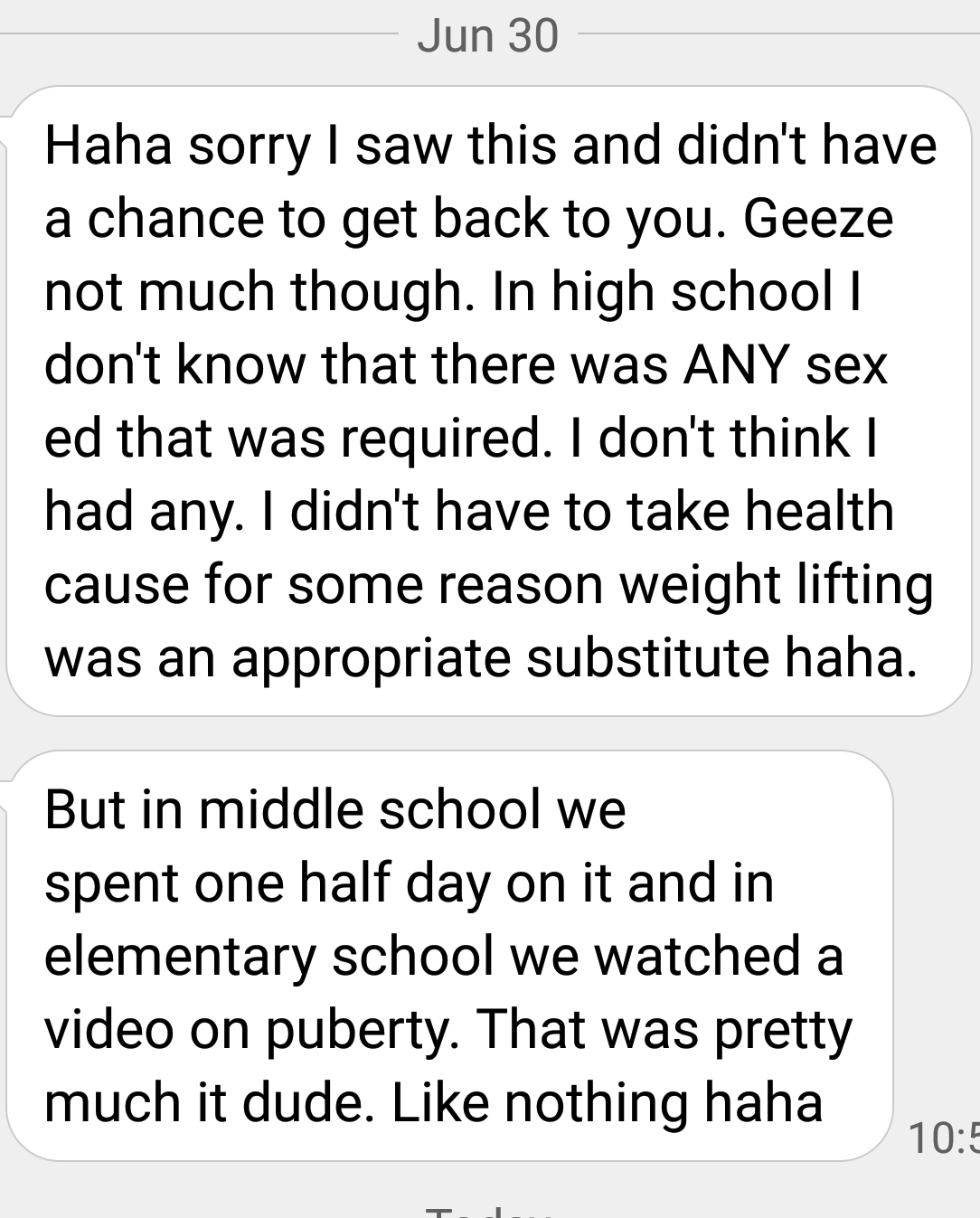
But as I thought about writing this post, I thought, surely there must be one person out there that had a sex education experience in their school that they would call “positive.” I did some mini data collection as a last ditch effort to find out. I emailed my parents, my brothers (who attended the same high school as me), and a friend who grew up in Philadelphia to give the data pool some variety. The data came back just as the rest of my anecdotal evidence from the last few years did – not great.
Now, I know that much of what I teach in sex ed will be dictated by my district policies and the community standards in which the school is located. So I do not propose to have any set-in-stone solutions to the following list of problems. It won’t take just one blog post to figure that out. And these are not problems that I intend to solve without a lot of support from a mentoring teacher and my administrators. This list is merely here to serve as a documentation of the patterns that I have noticed about the feelings, memories, and images that people I have talked to – loved ones and strangers alike – associate with their sex education. It also serves as a place for me to highlight potential strengths and weakness with these components of sex ed. I hope it serves as a jumping off point for when I eventually plan curriculum for my students. I strive to give my students a better sex education than the one most people have experienced because I believe my students deserve healthy lives which, yes, includes their sex lives.
***All of these stories have been shared with consent from my friends and family.***
1. Separation of the Sexes

This is probably the one I hear most people remember about their sex ed classes. They were separated (usually at a younger age, in middle school) by sex and shown their respective videos. Always videos. Never student-teacher interaction. Most people describe this memory as “awkward,” “giggly,” and “terrifying.”
Strengths of this approach:
- Gives some gravity to the topic by doing something different than regular class.
- People argue that it removes embarrassment from the room on both sides .
- The sex of the teacher usually matches the sex of the students so that students don’t feel “awkward.”
Weakness of this approach:
- The separation can create a sense of “secretiveness” between the sexes. The only thing more fascinating than what is going on in your room, is what is going on in the other room. This may establish a culture of non-communication about sex topics between the sexes.
- Ignores trans students and anyone else who does not identify with the genders within the gender binary
- Potentially herteronormative

- Eliminates the learning opportunity that could spring from the giggles (It’s ok to giggle – it is a little strange!) and the initial making fun of what the other sex is going through (a discussion on why it’s disrespectful to make fun of a person’s period or voice cracking).
- Just putting a video on communicates that the teacher is not comfortable teaching the topic and that kids and adults can’t have frank and honest conversations about sex with one another.
2. A P.E. teacher who was not comfortable teaching the topic taught Sex Ed
I chuckled when my younger brother told me who he had for health during his junior year – the football coach at our high school. Now, there is nothing wrong with a football coach teaching sex ed but you didn’t want this coach teaching your text ed. As my brother so perfectly put it:
“He clearly had no business teaching health at all. He was there to coach football and happened to be a PE and health teacher. Any good information I learned was from guest speakers…He was terrible, obviously, and we just did worksheets out of a book.”
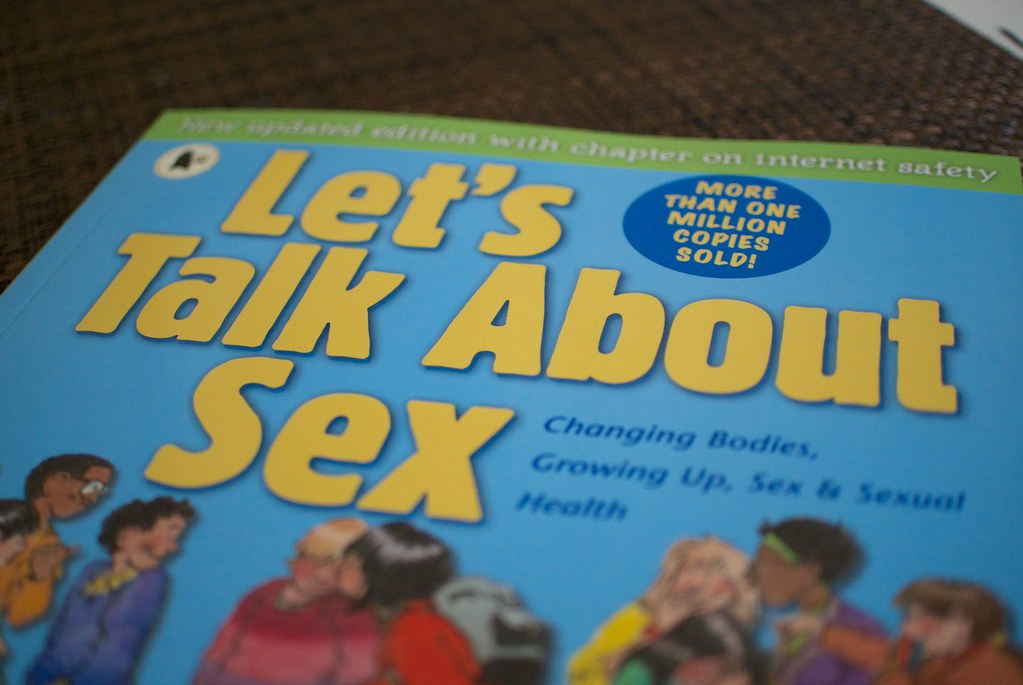
“Let’s talk about sex” by akrabat is licensed under CC BY-NC-SA 2.0
Strengths of this approach:
- None. If a teacher isn’t comfortable teaching a topic, they shouldn’t be teaching it. Period (sex ed pun intended).
- IF a P.E. teacher is well-educated on the subject, comfortable with it, and excited to teach it – GREAT! P.E. teachers are awesome and have an enthusiasm for the human body that could be a great asset for any health class!
Weakness of this approach:
- When teachers are disengaged and uncomfortable with this topic, they don’t teach students what they need to learn. Students are robbed of information they need in order to be healthy, as soon as that night or as late as a few years down the road.
- When a teacher doesn’t approach a topic as if it is important, students won’t approach the topic as if it matters to them.
- Reinforces the idea that sex shouldn’t be talked about which can reinforce rape culture and discourage consent.
3. Shame. Shame. And more shame.
Scare tactics galore! This was definitely my experience. One of the only things I remember about my sex ed unit in health from high school was the elderly woman from my church who came in and showed us pictures of STI lesions. It was scary. What person in their right mind would walk out of class that day wanting to have sex? My Philly friend, who is a Jewish woman, told an interesting story of how her school brought in a conservative Christian group to teach their sex ed. Her class was made up of mostly Jewish students and she remembered being very confused by the word “sin” as the concept of “sin” is fairly nonexistent in Judaism. She was eleven and required to sign a virginity contract.
Strengths of this method:
- It depends on what your goal is. I’m afraid my bias will come out here. So I will end it there.
Weakness of this method:
- Reinforces a culture of silence around discussing all things related to sex.
- Reinforces rape culture as it may encourage victims and/or survivors of sexual assault to stay silent.
- Shame is connected to negative mental health outcomes such as anxiety, depression, and drug abuse.
- Is not culturally responsive to students with belief systems different than traditional Western concepts of morality and sin.
4. They don’t Remember It At All
A lot of people I have talked to don’t remember sex education at all. They either didn’t have it and had to confirm with a friend or they knew they had it and didn’t remember anything from it. Do I even need to make a list on this one?
The way I teach my students sex education will depend on many factors. But one factor I can’t ignore is that the State of Oregon requires sex education to be comprehensive and identity-inclusive. While this is one of the health topics I am most passionate to teach to my students, it is one that I am most curious about how the intersection of school politics, community norms, and parental oversight will affect what I do in the classroom.
~~~~~~~~~~~~~~~~~~~~~~~~~~~~~~~~~~~~~~~~~~~~~~~~~~~~~~~~~~~~~~~~~~~~~~~
Do you remember your sex ed? What do you remember of it? Was it a positive, negative, or middle of the road experience? Are there things you learned in sex ed that you still use today to remain healthy? What do you wish was covered in your sex ed class that wasn’t?
 Amateur Hour