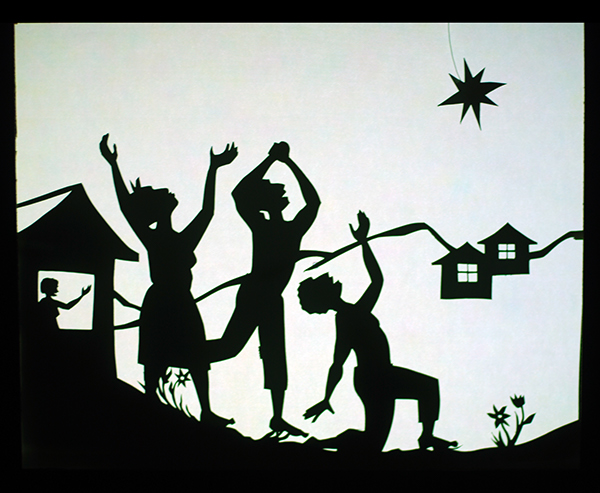
The following is a transcript of a podcast that I recorded to model the inquiry-based learning strategy of a Wonder Day project. In this strategy, students are asked to pose a question about anything – in this case Social Studies-related – and to dive into research in order to answer the question. This could be a quick deep dive for a day or could be stretch to a whole week or two in order to let the students really dig in. Inquiry-based learning like a Wonder Day project centers students as the questions masters and encourages them to be the driving force in getting those answers. They research the question and find out so much more along the way. Like I did! When I wondered, “How did the Underground Railroad actually work? ”
“I love history for a lot of reasons. But one of my favorite things about history is those moments when you give a historical event, a person, or a place – something you’ve heard about since elementary school – a really deep think. A deep think that makes you realize just how truly AMAZING this event or person was. That deep think forces you to step outside the context of your own world and into the world of the past. The context through which makes these events truly history-worthy. One deep think leads to another and soon enough the past is alive and gloriously fascinating.
I’ve had a recent fascination with Harriet Tubman for this very reason. Not that she wasn’t fascination worthy before. But I had never really taken a deep think into what makes her a historical idol. On the surface, she was a former slave who led slaves to freedom, from the South to the North via the Underground Railroad. But when I thought deeper about why she is history-worthy, about why she almost landed herself on American currency – a prestigious spot that has only ever been awarded to a few women and never to a black woman, I truly got it. Harriet Tubman was, excuse my language, but this is truly the only word to capture her glory – a total badass.
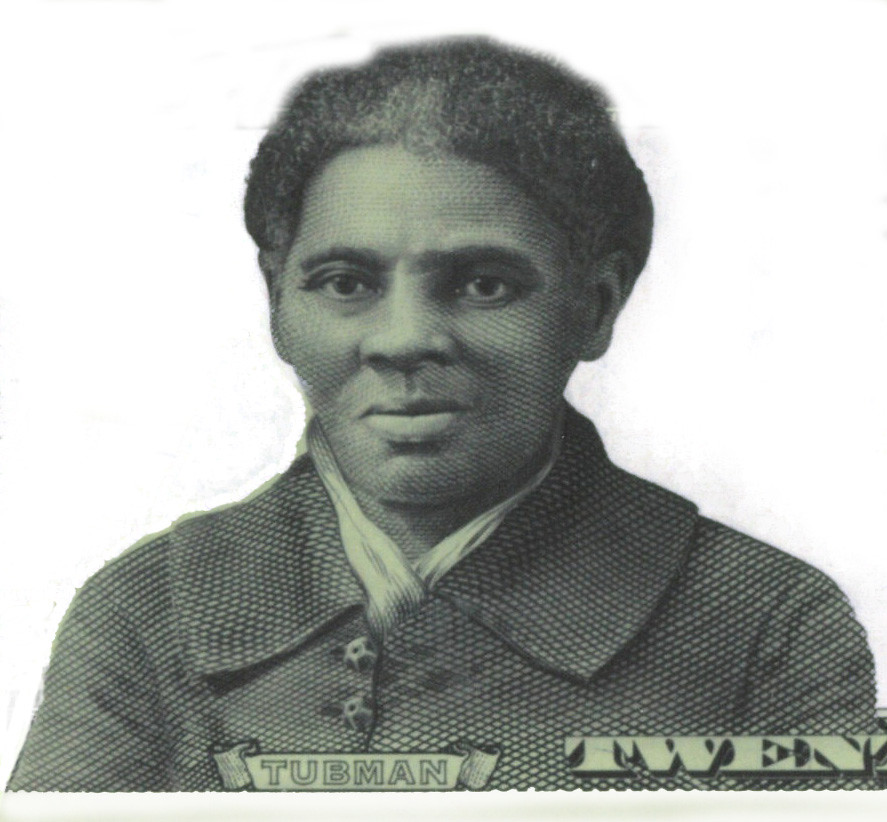
Harriet Tubman escaped slavery herself and knew the horrors of it first hard – the physical horrors, the mental and emotional horrors, and the horrors that slavery inflicted on the very dignity and soul of a person. When she made it freedom, she could have stayed put and just gone about her life as a freedwoman the best she could. She describes the feeling that washed over her when she found freedom,
“When I found I had crossed that line, I looked at my hands to see if I was the same person. There was such a glory over everything; the sun came like gold through the trees, and over the fields, and I felt like I was in Heaven.”
She felt that she needed to help other people experience Heaven too. Harriet would risk her own treasured and hard-won freedom to guide people to the gift that was their own freedom. I can’t even imagine how scary that must have been. But this woman put her most cherished thing on the line – her freedom and her life – so that others could experience the human joy of being in charge of their own lives.
This deep think led me to another deep think of the ever-familiar term “Underground Railroad.” A system of people who would aid escaped slaves to freedom, undermining the rule of law and, possibly, even more serious, the rule of culture. However, my deep think stopped there. I don’t know much about how The Underground Railroad worked. How did I miss this in my history class? How did I miss the story about how thousands of slaves risked their lives to be their own and how their generous aids risked their own freedom (as they would have been thrown in jail) to give someone a chance at self-ownership? How did I miss one of the most striking stories of shared humanity in all of human history? I dove deeper.
Turns out, I wasn’t the only one to have missed it! The Underground Railroad, because of how vital secrecy was to its operation, was not a source of scholarly interest for a long time because there was simply little information on it. However, in recent years sources have been discovered or analyzed and interest mounts about how the Underground Railroad worked exactly.
The first mention of it came in 1831 when a slave owner from Kentucky complained in a public newspaper about how a slave of his had escaped to Ohio with the help of an “underground railroad.” However, people had been aiding slave escapes as early as the 1700s – there is a record of George Washington himself complaining of Quakers helping his slaves escape. Vigilance Committees started in NY and Philidelphia by the late 1830s. These committees protected slaves escaping from bounty hunters under the Fugitive Slave Acts. Later, members would serve as safe-houses, conductors, informants, and would raise money for the efforts and to give to newly freed slaves. By 1840, “The Underground Railroad” was a term used to describe a loose network of regional groups who guided slaves to freedom and housed them along the way.
Where was freedom? Freedom was in many more places than just the North. Tubman would guide people as far North as Canada because she did not trust the Northern laws and people to treat freed slaves with the dignity and respect they deserved. Many would settle North, however. Others found freedom out West in Ohio, Iowa, or Illinois. Some went South to Mexico, the Southwest territories, and some even as far as South America to escape the racism that plagued all of the United States.
The networks that made up the Underground Railroad were mostly active in Border States. While some networks existed in the Deep South, it was often too risky to operate there. Slaves were mostly on their own in their attempts in the Deep South to escape plantations or farms. If they were able to make it to a border state, this is where their journey with the Underground Railroad would start. However, there are accounts of Underground Railroad “conductors” or leaders posing as slaves on a plantation and leading slaves out right under the noses of the landowners. Excuse my language, but how badass is that?
The “conductors” or guides and “station-masters” or safe-house owners were mostly black people. Either former slaves or those born into freedom. They were ordinary people who worked ordinary jobs in their communities but saw their side-gig as their moral duty to other black people. White abolitionists were counted among the conductors, station masters and others who helped Underground Railroad efforts. Notable people who are now known to have housed runaway slaves, given money to the efforts, or conducted include Fredrick Douglas (helped 400), Reverend Jermain Loguen in Syracuse (helped 1500), the famous John Brown, Senator and Secretary of State William Sewerd, and Supreme Court Justice John Jay.
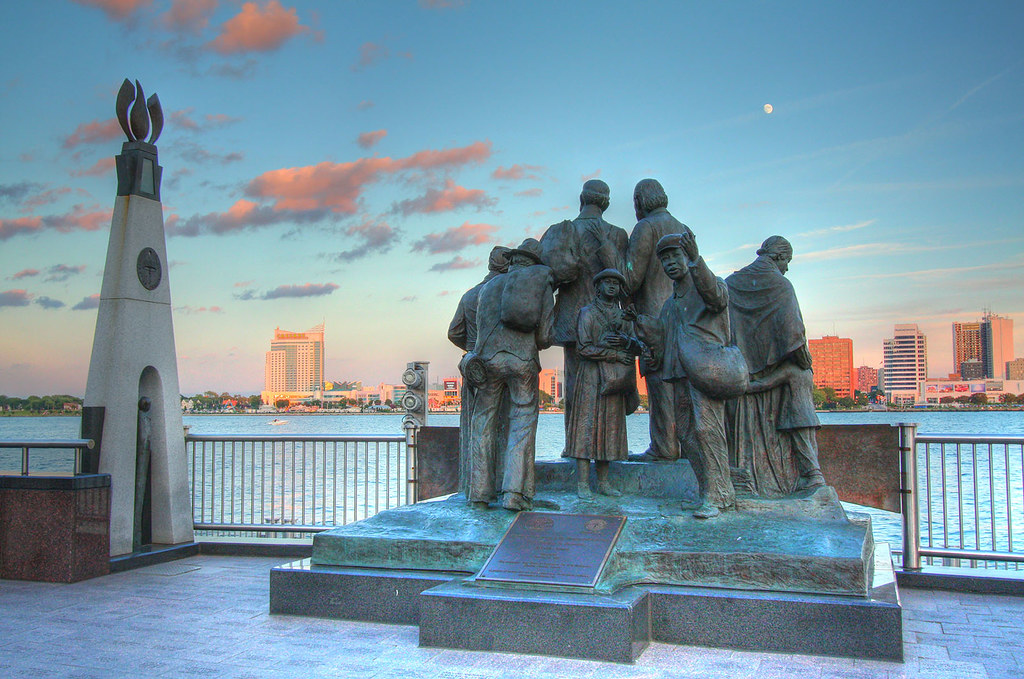
“Underground Railroad Memorial” by 123 Chroma Pixels is licensed under CC BY-SA 2.0
Experiences on the journey on an Underground Railroad route were varied and diverse. Generally, people would move 10 to 20 miles a day. They would use all forms of transportation – walking, train, boat, horseback. Codenames were used to describe places and people along the route. The runaway slaves were termed, “cargo,” safe-houses were “stations,” The Ohio River was called “The River Jordan” and Canada was “The Promise Land.” Communication was regional traveled by mouth or by letter and was kept among those trusted within the network. Safe houses could be luxurious or bare bones. Some routes, like in the deep South before the war, were secret. Others were quite well known if the area did not enforce the Fugitive Slave Act. During the Civil War, the routes in hostile parts of the COnfederacy or in border states became less and less secretive. Soon, Underground Railroad routes and movements were a loud and proud anti-Confederacy civilian and military war effort. You can still visit the sites of the Underground Railroad – the National Parks Service has a list of sites still standing. A kind stranger from the internet mapped and Underground Railroad themed road trip through Eastern Seaboard for those history buff travelers who love to read placards.
My deep dive into The Underground Railroad led me to an even deeper dive into the badass that Harriet Tubman was. Not only did she help over 100 slaves to freedom, she was also, get ready for it, a SPY with the Union Army during the Civil War! She was hired to dress as an old woman and go behind enemy lines to gather intel. She also would recruit informants from freed slaves that had valuable knowledge of the Confederacy’s goings on. She was also the first woman in US history to lead a military expedition!!!! She led Colonel James Montgomery’s troops in the Combahee River Raid, a raid on a number of plantations and infrastructure in South Carolina. The raid resulted in the freeing of over 700 slaves. Who KNEW?! Of course, Tubman was not properly compensated for her efforts until years after the Civil War. But holy crap, how cool is that? Once again, Harriet Tubman risked her life to set others free. To share the gift of freedom with other Americans.
When wishing someone bravery in the future, I think the best wish would be to wish them the confounding bravery of Harriet Tubman. “
Thanks for reading! Feel free to leave comments below!
Sources for this post include:
https://www.history.com/topics/black-history/underground-railroad
https://www.pbs.org/wgbh/aia/part4/4p2944.html
https://freedomcenter.org/enabling-freedom/history
 Amateur Hour